
How to Identify Faulty Wiring in Your Property
- Justin Burrows
- 5 days ago
- 5 min read

A light that flickers once during a storm may be harmless. A light that flickers whenever the washing machine starts, a power point that feels warm, or a circuit breaker that repeatedly trips is different. Knowing how to identify faulty wiring helps you act before a small defect becomes an electric shock, fire or costly loss of power.
Electrical faults are not always visible, and symptoms can have more than one cause. The safe approach is to observe what is happening, reduce the immediate risk and arrange inspection by a licensed electrical contractor. Do not remove power point covers, open the switchboard or attempt repairs yourself.
Common signs of faulty wiring
Faulty wiring can develop through age, damage, loose connections, overloaded circuits, moisture exposure or poor-quality previous work. A property may have only one warning sign at first, but repeated or worsening symptoms should never be ignored.
Circuit breakers or RCDs that trip repeatedly
A circuit breaker trips when a circuit is overloaded or shorted. An RCD, also called a safety switch, disconnects power when it detects current flowing where it should not, helping protect people from electric shock.
One trip after plugging in a clearly faulty appliance can point to the appliance. However, if the same breaker or RCD trips with different appliances connected, or trips again after being reset, the issue may be within the fixed wiring, a power point, a light fitting or the circuit itself. Avoid repeatedly resetting it. Leave it off if it will not remain on and have the circuit assessed.
Flickering, dimming or unusually bright lights
Lights can flicker because of a failing globe or incompatible dimmer, particularly with older fittings. But flickering across several lights, lights that dim when another appliance starts, or lights that suddenly become brighter can indicate a loose connection or voltage issue.
Pay attention to patterns. Note which rooms are affected, whether it happens when high-demand equipment runs, and whether the problem occurs on one circuit or throughout the property. This information helps an electrician investigate efficiently.
Warm, discoloured or damaged power points and switches
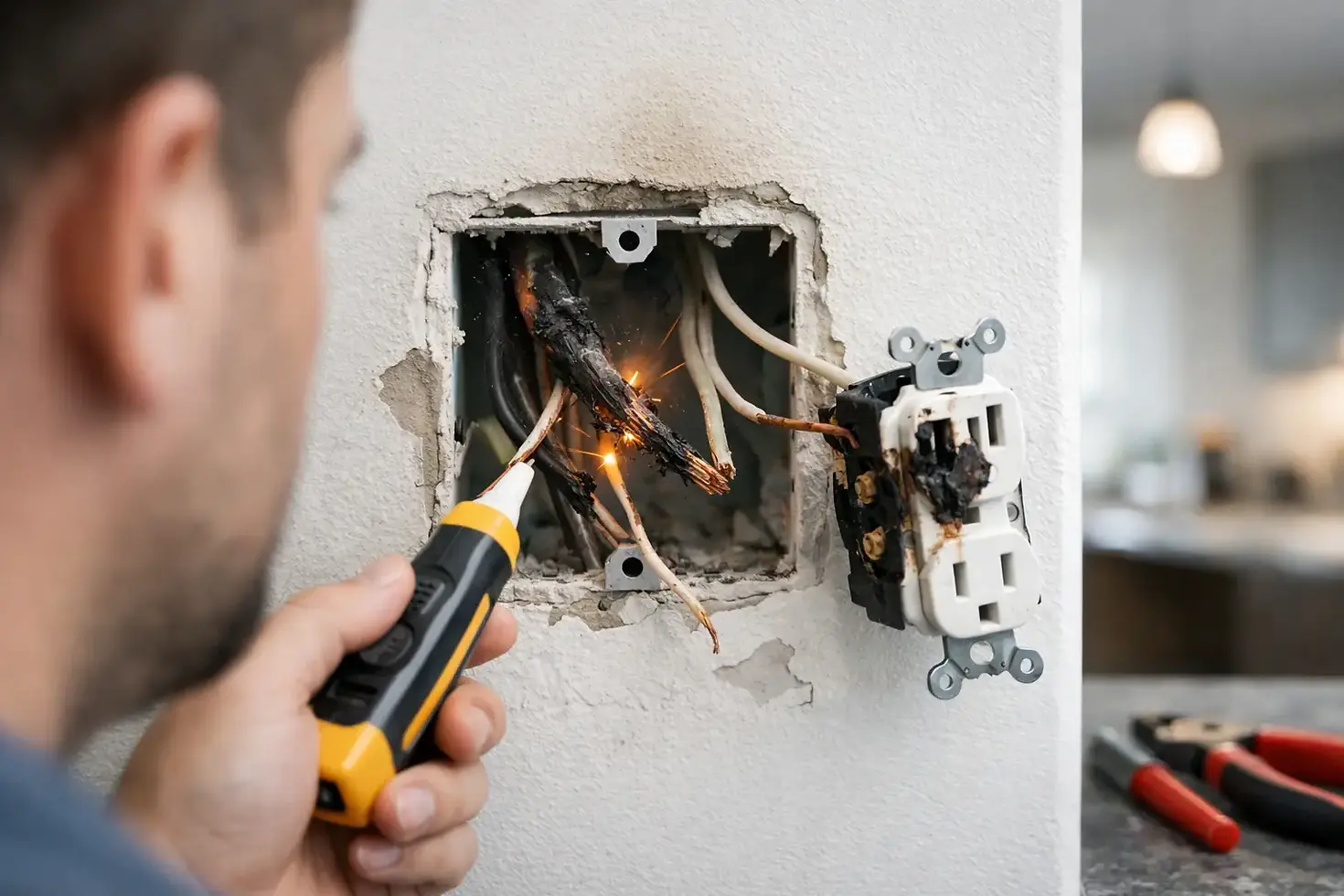
Power points and switches should not become hot in normal use. A slightly warm charger plug may be normal, but warmth from the wall plate, a burning smell, scorch marks, cracking, yellowing or buzzing is not.
Turn off the relevant circuit at the switchboard if it is safe to do so, stop using that outlet and arrange urgent electrical attention. Do not use a damaged power point simply because it still supplies power. Heat can indicate a loose terminal or deteriorated connection that may worsen under load.
Buzzing, crackling or a burning smell
Electricity should operate quietly. A faint hum from some equipment may be expected, but buzzing from a switch, power point, light fitting or switchboard needs professional assessment. Crackling sounds, smoke or a hot plastic smell require prompt action.
If there is smoke, visible sparking or fire, move people away from the area, call emergency services and only isolate power if it can be done without approaching danger. Never throw water on an electrical fire.
Frequent blown globes or failed fittings
A globe can fail due to age or vibration. Frequent failures in the same fitting, particularly alongside flickering or heat, can point to a defective fitting, poor connection or voltage problem. Replacing globes repeatedly treats the symptom, not necessarily the cause.
Shocks, tingling or static from appliances
A noticeable shock or tingling feeling from an appliance, tap, metal fitting or switch is a serious warning sign. Stop using the appliance or circuit immediately. Even a mild sensation may indicate damaged insulation, ineffective earthing or another fault requiring testing.
How to check safely without doing electrical work
Homeowners and business operators can make useful observations without touching live electrical components. Start by identifying whether the issue is isolated to one appliance, one outlet, one room or multiple areas of the property.
Unplug non-essential appliances from the affected circuit where safe, then check whether the breaker or RCD still trips. Do not use extension leads, double adaptors or power boards to work around a problem. They can overload another circuit and conceal the original fault.
Record the symptoms before contacting an electrician. Include when the issue began, what was operating at the time, which circuits are affected, whether there has been recent renovation work, water ingress, pest activity or storm damage, and whether the problem is getting worse. Clear details can reduce diagnosis time while helping the electrician prioritise risk.
A visual check from a safe distance can also reveal damaged cords, loose plugs, cracked plates or water around electrical equipment. These observations are valuable. Opening a fitting to look behind it is not.
When faulty wiring is an emergency
Some faults should be treated as urgent rather than scheduled maintenance. Arrange immediate professional assistance when there is a burning smell, smoke, scorching, sparking, electric shock, persistent loss of power, exposed wiring or water entering an electrical fitting.
Water and electricity are particularly hazardous. After a roof leak, burst pipe or flooding, do not assume affected lights, power points or wiring are safe once the area looks dry. Moisture can remain within walls, ceilings and fittings. Keep clear of the affected equipment and have it inspected before use.
For commercial properties, act quickly if a fault affects emergency lighting, safety systems, refrigeration, essential equipment or customer areas. Temporary workarounds may keep operations moving, but they should not compromise electrical safety or compliance.
Why the cause is not always obvious
The visible symptom rarely confirms the precise fault. A tripping RCD could relate to a damaged appliance, a water-affected outdoor fitting, deteriorated cable insulation or a fault on a circuit. Flickering may originate at a light fitting, a dimmer, a connection or the supply arrangement.
That is why electrical diagnosis involves more than replacing a switch or resetting a breaker. A licensed electrician uses appropriate test equipment to inspect circuits, connections, protective devices and earthing, then repairs the underlying issue in line with applicable requirements. The right fix depends on the age of the installation, the condition of existing wiring and how the property uses power.
Older homes deserve particular attention. Electrical systems were designed for the appliances and demand of their time. Added air conditioning, induction cooking, home offices, pool equipment, solar systems or EV charging can place different demands on an installation. That does not automatically mean the wiring is unsafe, but it does make a professional assessment worthwhile when warning signs appear.
Preventing wiring faults from becoming larger problems
Regular attention to electrical safety can prevent many faults from progressing. Test RCDs using their test buttons in accordance with the manufacturer's instructions, and seek advice if a device does not operate as expected. Avoid overloading outlets and replace visibly damaged leads or appliances rather than taping or patching them.
Use qualified trades for renovations, new circuits, outdoor lighting and appliance connections. Poor connections may remain hidden behind walls or ceilings for years before heat, movement or moisture exposes the problem. Licensed electrical work provides accountability and helps protect the people using the property.
For homeowners, landlords and small-business operators in Byford and surrounding areas, a clear diagnosis is more useful than a temporary reset. Burrows & Co. Electrics provides licensed, insured electrical work with direct owner-led accountability, so faults can be assessed properly and explained in plain English.
If something electrical feels, sounds or smells wrong, trust that warning. Isolate the affected area where safe, avoid using it and have a licensed electrician determine what is happening before the fault has the chance to escalate.



Comments