
Outdoor Security Lighting Installation Perth
- Justin Burrows
- Jul 25
- 5 min read

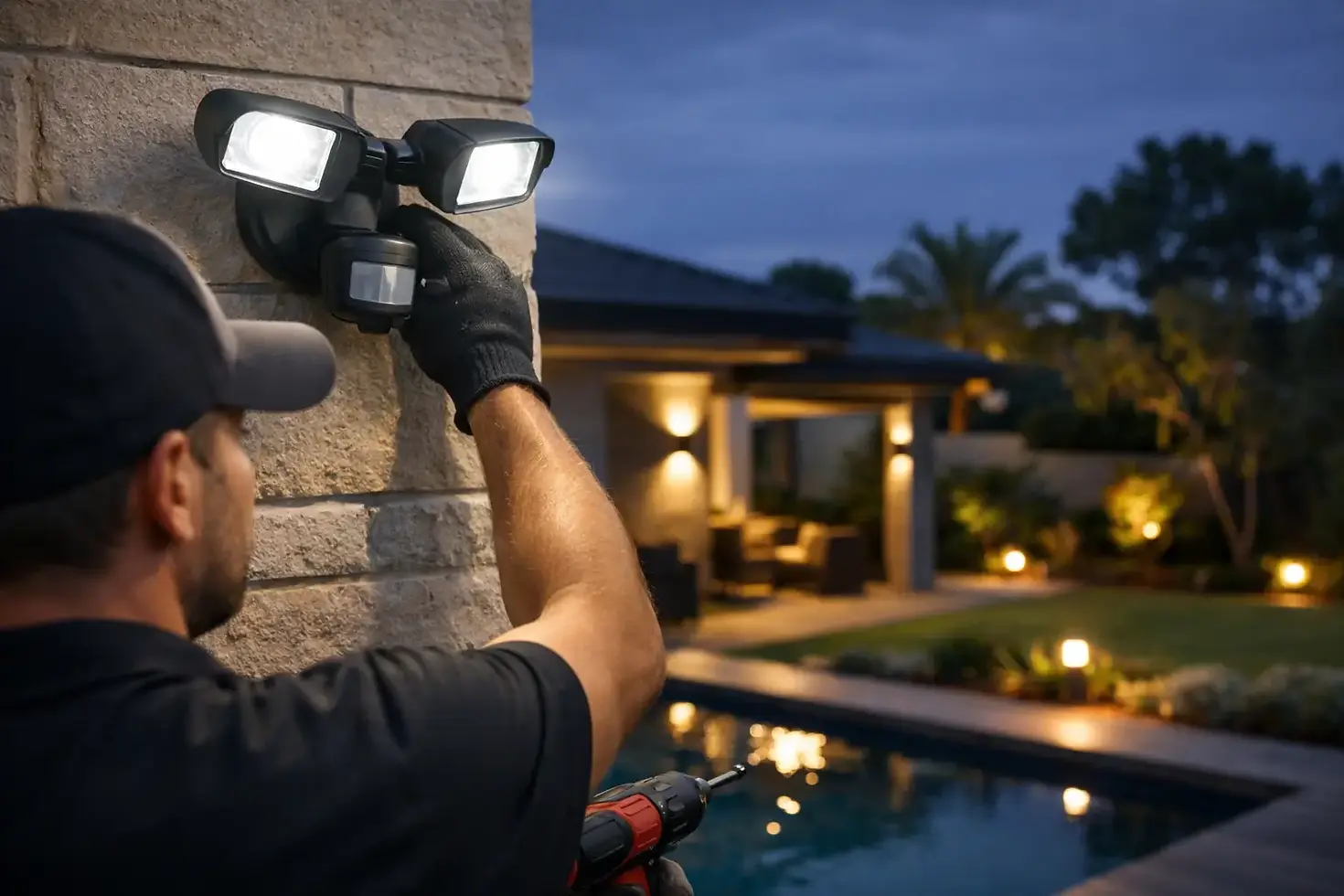
A dark side gate, driveway or rear entry can make a property less comfortable to use and harder to monitor after sunset. Outdoor security lighting installation Perth homeowners and business owners can rely on starts with more than choosing the brightest fitting on the shelf. Effective lighting needs to reveal access points without creating glare, disturbing neighbours or leaving the rest of the property in deeper shadow.
For homes, rentals and small commercial premises, the right design improves everyday access as well as security. It can make arriving home late easier, give visitors a clear path to the door and support camera coverage where it matters. The best result is usually a considered combination of light placement, controls and professional electrical installation.
Start with the places that matter most
Security lighting works best when it is planned around how people enter, leave and move around the property. Walk the site after dark if possible. What seems like an obvious area during the day can look very different at night, particularly around fences, bins, sheds, carports and side paths.
Priority locations commonly include the front entry, driveway, garage, side access, rear door and any gate leading to a yard or laneway. For a commercial property, this may also include staff entrances, loading areas, customer parking and waste storage. The aim is not to flood every boundary with light. It is to remove concealed approach routes and provide useful visibility where legitimate activity takes place.
A single fitting over the front door may be enough for a compact unit with an open driveway. A larger block with a long side passage may need separate fittings at each end of the path. Each property has different sightlines, existing buildings and neighbour considerations, so a site assessment is more useful than a one-size-fits-all layout.
Choose fittings for control, not just brightness
Brightness alone does not equal better security. An overly powerful floodlight can produce harsh reflections from pale paving, garage doors or windows. It may also reduce visibility by causing your eyes, or a camera, to adjust to the brightest point rather than the surrounding area.
LED fittings are a practical option for most outdoor security applications because they use less energy than older lamp types and have a long service life. Look beyond wattage and consider light output, beam spread and the quality of the fitting. A wide beam can suit a driveway or courtyard, while a more directed fitting is often better for a narrow side path.
Colour temperature also affects how an area feels and performs. A neutral white light is commonly suitable around entries and work areas. Cooler light can appear sharper, but it is not automatically the right choice for every home. The priority is clear visibility without an unpleasant or excessively stark result.
Outdoor fittings need an appropriate IP rating for their exposure to dust and water. A light installed under a deep eave faces different conditions from one mounted openly on a fence, wall or outbuilding. Coastal conditions, sprinkler overspray and direct weather exposure should also be considered when selecting equipment.
Motion sensors versus dusk-to-dawn lighting
Motion-sensor lights are useful at entries, side paths and lower-traffic areas. They provide light when someone approaches, reduce unnecessary energy use and can draw attention to activity around the property. However, poorly set sensors can activate repeatedly from pets, trees, passing vehicles or nearby foot traffic.
A sensor should be positioned and adjusted with its detection zone in mind. If it faces directly towards a busy street, false activations are likely. Mounting height, angle, sensitivity and the time the light remains on all affect performance. Testing the settings after installation is essential.
Dusk-to-dawn lighting suits locations where consistent low-level illumination is more useful, such as a front path, building entrance or business signage area. It can also work well alongside motion-activated floodlighting: one fitting provides safe, steady wayfinding while another gives stronger temporary light at an access point.
Avoid glare, overspill and camera blind spots
Good security lighting lets you see what is happening. Poorly directed lighting can make a neighbour’s bedroom brighter, spill into the street or interfere with your own camera footage.
The position of the fitting matters as much as the fitting itself. Light aimed down across a path or entry generally provides better usable illumination than a floodlight pointed outward at eye level. Shielded fittings and carefully selected beam angles help keep light on the intended area.
If cameras are part of the security setup, consider their field of view before finalising the light locations. A fitting aimed towards the camera can create flare and wash out faces or vehicle details. In many cases, light should come from beside or slightly in front of the camera, directed across the subject rather than back into the lens. Testing at night is worthwhile, especially at driveways where number plate visibility may be relevant.
For adjoining homes and properties, respectful light design is also good risk management. Excessive spill can become a source of complaints, while a more focused approach usually delivers better security results with less energy use.
Plan the electrical work properly
Outdoor electrical work must withstand weather, movement, heat and moisture over time. Cables, connections, mounting points and switches all need to be selected and installed for the environment. An attractive fitting will not compensate for unsuitable wiring methods or exposed connections.
A qualified electrical contractor can assess whether an existing circuit has capacity, whether a new circuit is required and where controls should be located. This matters in older homes, renovated properties and buildings where outdoor power has been added in stages. A proper assessment can also identify damaged cabling, unsuitable existing fittings or switchboard issues before they become a larger problem.
In Western Australia, electrical installation work must be carried out by an appropriately licensed electrical contractor. This is particularly relevant for fixed wiring, new circuits and hard-wired outdoor lights. DIY products may appear simple, but fixed electrical work is not a place to take shortcuts. Compliance, correct testing and safe connection are central to a dependable installation.
Burrows & Co. Electrics is a fully licensed and insured WA electrical contractor, led by owner Justin Burrows, with more than 10 years of industry experience. For clients in Byford and nearby areas, direct contact with the contractor responsible for the work helps keep decisions clear from the first site discussion through to completion.
A practical installation checklist
Before arranging an installation, it helps to think through a few decisions. This keeps the conversation focused on how you use the property, rather than simply where a light could be mounted.
Identify the entries, paths, gates and parking areas that need better visibility.
Decide whether each area needs motion activation, timed lighting or dusk-to-dawn operation.
Note where cameras are installed or planned, including any current night-time image problems.
Consider nearby windows, neighbours and reflective surfaces such as metal fencing or pale paving.
Check whether you want manual switching available inside the house or business as well.
For landlords and property investors, durable fittings and straightforward controls can reduce maintenance calls between tenancies. For businesses, lighting should also suit staff movements, opening hours and any areas where customers need safe access after dark. The right answer depends on the property, not a generic package.
Maintenance keeps lighting useful
Even high-quality outdoor lighting needs occasional attention. Dirt, cobwebs and insect activity can block a sensor or reduce light output. Storm damage, garden growth and changes to fencing can alter a fitting’s direction or sensor coverage.
Check lights periodically at night. Confirm that motion sensors activate at the right point, that fittings are secure and that no light has begun shining into windows or across neighbouring properties. If a fitting flickers, trips a circuit breaker, has water inside it or shows damaged cables, stop using it and arrange an electrical inspection.
A well-planned security lighting system should feel useful rather than intrusive. When each fitting has a clear purpose, the property is easier to access, easier to observe and more comfortable to use after dark.


Comments