
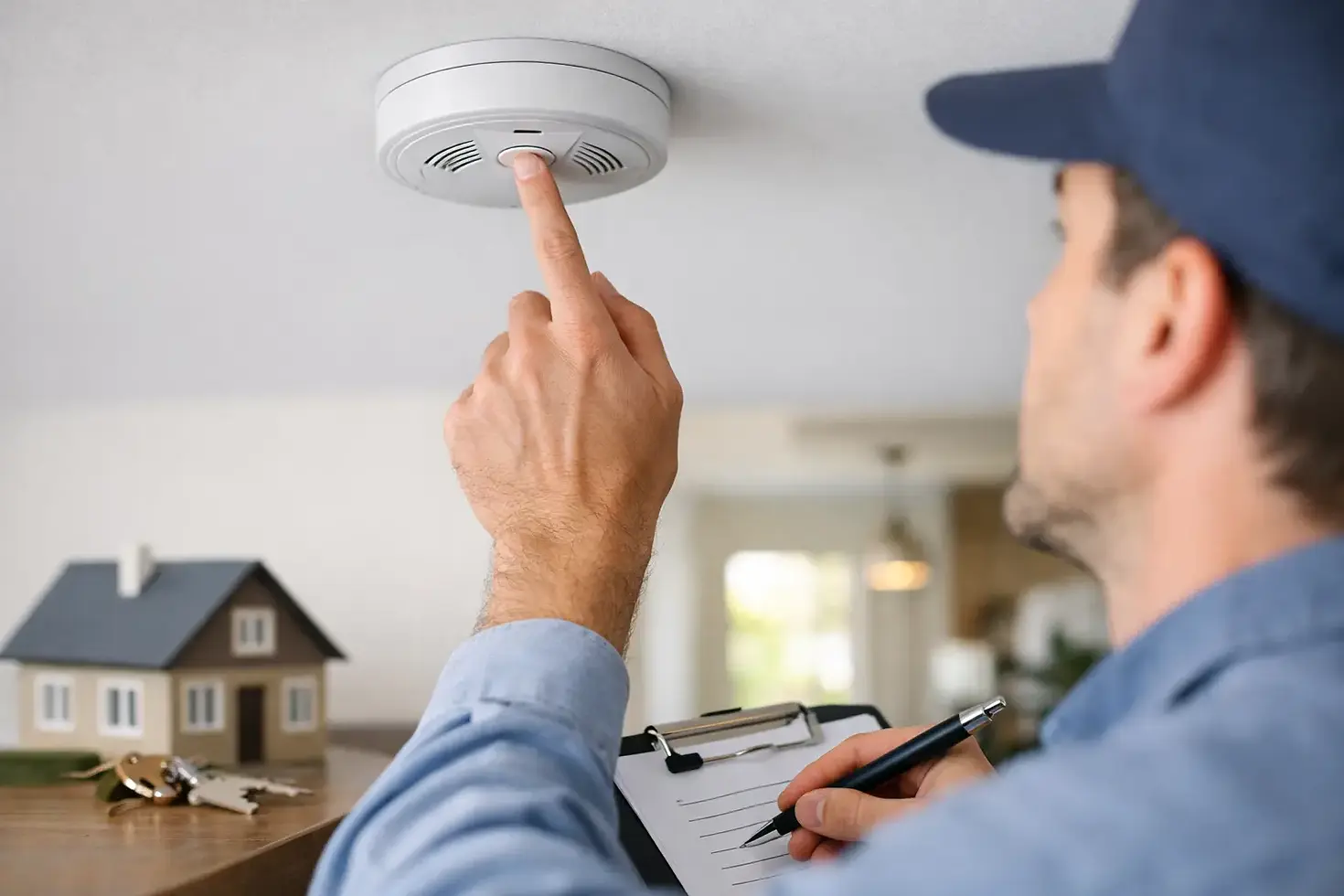
Smoke Alarm Compliance for Landlords in WA
- Justin Burrows
- Jul 18
- 5 min read

A smoke alarm that has been painted over, passed its expiry date or chirps intermittently can become a serious issue the moment a tenancy begins. Smoke alarm compliance for landlords is not simply a box to tick at handover. In Western Australia, it is an owner's responsibility that protects tenants, supports a safer property and helps avoid preventable disputes when something goes wrong.
For landlords, the practical challenge is knowing what must be installed, who is responsible for ongoing upkeep and when a licensed electrical contractor needs to be involved. The answer is not always as simple as replacing a flat battery.
What smoke alarm compliance for landlords requires in WA
In WA rental properties, owners are generally required to have compliant smoke alarms installed before a tenancy starts and ensure they are in working order at the beginning of each tenancy. The alarms must meet the relevant Australian Standard, AS 3786, and be installed in the required locations.
For most properties with mains power, smoke alarms must be permanently connected to the mains electricity supply. They should also have a battery backup so the alarm can continue operating during a power outage. A battery-only alarm is not normally a like-for-like replacement for a hard-wired alarm.
There are limited circumstances where a mains-powered alarm may not be required, such as where connection is impracticable, there is no mains electricity supply, or a heritage restriction applies. These exceptions should not be assumed. If a property has an older alarm or an unusual layout, obtain advice before deciding that a battery-operated unit is acceptable.
The owner must also ensure alarms are less than 10 years old. Check the manufacture or replacement date marked on the alarm itself rather than relying on the date it was installed. An alarm may still sound during a test while its sensing components are beyond their intended service life.
Correct alarm type and placement matter
A compliant alarm is only effective if it is suitable for the property and installed in the right location. Smoke alarms are commonly required in the path of travel between sleeping areas and the rest of the dwelling, with additional alarms needed for multi-storey homes. The precise arrangement depends on the building design, number of levels and applicable building requirements.
Alarm location is not a matter of convenience. Installing an alarm too close to a bathroom, cooking area, ceiling fan or air-conditioning outlet can cause nuisance alarms or affect how smoke reaches the sensor. At the same time, moving a required alarm because tenants find it inconvenient may leave the property non-compliant.
Interconnected alarms can provide added protection in larger homes or properties with separated bedrooms. When one alarm detects smoke, all connected alarms sound. Whether interconnection is required depends on the building, its age and any renovation or building approval requirements. It is worth raising this with an electrician when upgrading an older rental property.
Landlord and tenant responsibilities during a tenancy
The landlord’s responsibility does not end once the keys are handed over. Owners need to provide working alarms at the start of the tenancy and ensure the required smoke alarm system remains compliant.
During the tenancy, tenants are generally responsible for replacing batteries in smoke alarms when needed, unless the rental agreement states otherwise. They should also report faults, repeated chirping, physical damage or alarms that fail to respond to testing. A tenant should not remove, disconnect, cover or paint an alarm.
Clear communication helps avoid confusion. At the entry condition inspection, record that each alarm was present and operating. Show the tenant where alarms are located, explain the test button and ask them to report a fault promptly. This is particularly useful with mains-powered alarms, where a fault may involve the electrical circuit, backup battery or the alarm unit itself.
A landlord should not rely on a tenant to diagnose an electrical issue. If a hard-wired alarm will not test, is repeatedly sounding without cause or has lost its mains power indicator, arrange for a licensed electrical contractor to inspect it.
Maintenance is more than pressing the test button
Regular testing is a sensible part of property maintenance, but it should be meaningful. Pressing the test button confirms that the alarm can sound. It does not necessarily confirm that the smoke sensor remains within its service life or that the unit has been installed correctly.
At routine inspections or between tenancies, check that each alarm is clean, unobstructed and firmly fixed in place. Dust, insects and paint can interfere with performance. Vacuuming around the alarm with a soft brush attachment may help remove dust, but avoid spraying cleaning products or inserting anything into the unit.
Keep an eye out for warning signs such as intermittent chirping, yellowed plastic, missing covers, loose mounting bases or an alarm with no visible date label. A chirp can indicate a low backup battery, but it can also point to an end-of-life warning or a fault. Replacing the battery without checking the alarm’s age can leave an expired unit in service.
For a hard-wired alarm, replacement and electrical connection work should be completed by a suitably licensed electrician. This protects the property owner from poor workmanship and helps ensure the replacement is compatible with the existing circuit and any interconnected alarms.
Check smoke alarms before every new tenancy
The changeover period is the best time to deal with compliance issues. Access is easier, tenants are not disrupted and small problems can be fixed before they become an urgent maintenance call.
A practical pre-tenancy check should confirm that every required alarm is installed, tests correctly, is within its 10-year service life and has an operational backup battery where applicable. Check that no alarm has been painted, covered, removed or damaged during the previous tenancy.
If an alarm needs replacement, do not leave the job until the day keys are collected. Some replacements are straightforward, while others require wiring repairs, a new mounting base or assessment of the alarm layout. Renovations can also change the compliance picture. A new bedroom, enclosed living space or second storey may require additional smoke alarms as part of the building work.
Documenting inspections, replacements and electrical repairs is good property management. Keep invoices, alarm dates and notes from entry and routine inspections with the property records. If a question arises later, a clear record shows that reasonable steps were taken to maintain a safe rental home.
When to call a licensed electrician
Changing a removable battery is often a tenant maintenance task. Electrical work is different. Call a licensed electrician if a mains-powered alarm has no power, a replacement requires wiring, alarms are not interconnected as expected, an alarm keeps triggering without an apparent cause, or the home has been altered since the alarms were last assessed.
This is also the right approach for older properties with battery-only alarms. The property may qualify for an exception, or it may need a mains-connected upgrade. A proper assessment is safer than making assumptions based on what has been in place for years.
For landlords in Byford, Armadale and surrounding areas, Burrows & Co. Electrics can assess existing smoke alarms and complete compliant electrical installation work under WA Electrical Contractor Licence EC-17326. The focus should be on a clear answer: what is installed, whether it is operating correctly and what work, if any, is needed to bring the property up to standard.
A working smoke alarm is a small device with a large role in a rental property. Treat each tenancy change as an opportunity to check it properly, replace ageing units early and address electrical faults before they become a risk for the people living in the home.


Comments